
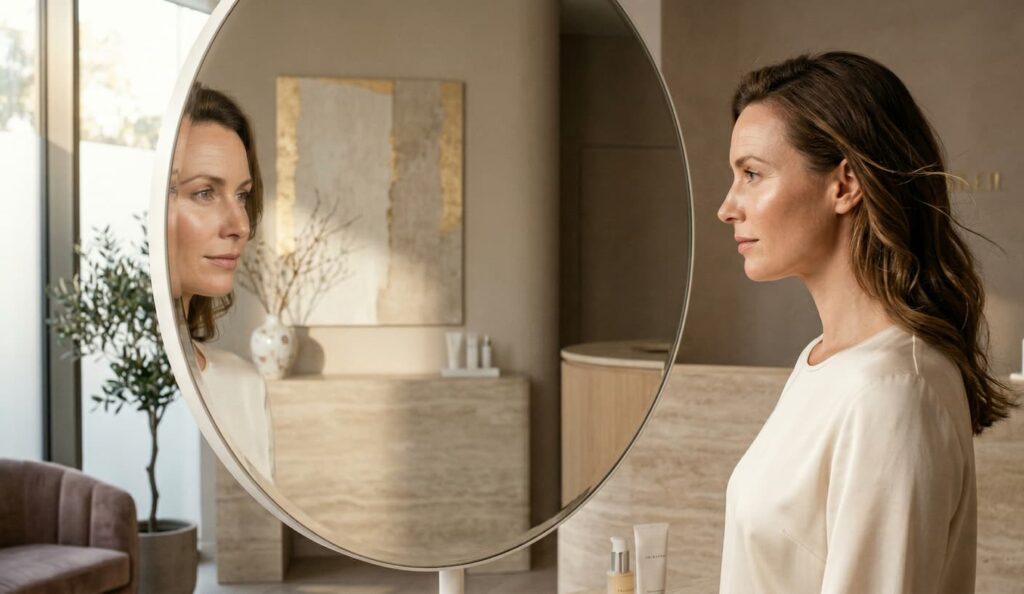
There isn’t a single moment when aging suddenly begins. Most people don’t wake up one day and notice a dramatic change. Instead, it shows up gradually — a slight loss of firmness, a bit less glow, or the feeling that your skin doesn’t “bounce back” the way it used to.
For many, this shift starts in their early 30s. And in most cases, the underlying reason is the same: collagen loss.
Understanding collagen loss after 30 helps explain why these changes happen — and more importantly, what you can do to slow them down.
What Collagen Actually Does for Your Skin
Collagen is the protein responsible for giving your skin its structure. It keeps everything firm, smooth, and resilient. When collagen levels are high, skin looks plump and even, with that natural tightness often associated with younger skin.
In your early years, your body produces collagen efficiently. Skin repairs itself quickly, and even small damage doesn’t leave lasting marks. That’s why in your 20s, your skin can tolerate late nights, sun exposure, and stress without showing much of it.
But that balance doesn’t last forever.
Why Collagen Loss Starts After 30
Collagen production doesn’t suddenly stop — it slows down. From your mid-20s onward, your body produces slightly less collagen each year. By the time you reach your 30s, that decline becomes more noticeable.
At this stage, your skin begins to lose density. It holds less moisture, elasticity weakens, and the overall texture starts to change.
There are also external factors that make this process faster, especially in environments like Dubai.
Sun exposure plays a major role. Constant UV exposure breaks down collagen fibers and makes it harder for your skin to rebuild them. Over time, this leads to visible signs like fine lines and uneven texture.
Lifestyle choices also contribute. Poor sleep, stress, smoking, and diet all influence how quickly collagen breaks down. While these may not show immediate effects, they accumulate over the years.
Hormonal changes add another layer. Even subtle shifts can impact how your skin behaves, particularly in terms of thickness and elasticity.
The First Signs of Collagen Loss
The early signs of collagen loss are often easy to miss. They don’t appear as deep wrinkles or major sagging at first. Instead, they show up in more subtle ways.
You might notice that your skin feels slightly thinner or less firm. Fine lines begin forming around the eyes, especially when you smile. The jawline may look softer than before, and the cheeks may lose some of their natural volume.
Skin can also start to look dull. This isn’t just about hydration — it’s often linked to the structural changes happening underneath.
This is usually the stage when people begin exploring anti aging treatments Dubai clinics offer, not because they look significantly older, but because something feels different.
Why Aging Feels Faster After 30
One of the most common concerns is that aging seems to accelerate after 30. The reason for this isn’t just collagen loss — it’s the imbalance between production and breakdown.
In your 20s, your skin repairs itself efficiently. Even if collagen breaks down, it is replaced quickly. After 30, that repair process slows down, while external damage continues.
This creates a visible shift. Changes that once took years to appear can now become noticeable within a shorter period.
That’s why many people feel like their skin has “suddenly” changed, even though the process has been happening gradually all along.
Can You Increase Collagen Naturally?
A common question is whether it’s possible to reverse this process naturally. While you can’t completely restore collagen levels through lifestyle alone, you can support your skin in meaningful ways.
Simple habits make a difference. Wearing sunscreen daily protects existing collagen. Staying hydrated helps maintain skin function. A balanced diet rich in vitamins and antioxidants supports overall skin health.
Understanding how to increase collagen naturally is important, but it’s equally important to recognize its limits. Natural methods are more effective at preserving collagen than rebuilding what has already been lost.
Treatments That Help Restore Collagen
When collagen loss becomes visible, many people look for solutions that go beyond skincare products. This is where modern aesthetic treatments come in.
At The Reformery Aesthetic Clinic, the focus is not on temporary fixes but on treatments that work with your skin’s natural processes.
Procedures designed to stimulate collagen production have become some of the most effective options in recent years.
Radiofrequency microneedling, for example, targets deeper layers of the skin to trigger collagen regeneration. Over time, this improves texture, firmness, and overall skin quality.
Skin boosters are another option. These injectable treatments improve hydration and support collagen production from within, making them ideal for early signs of aging.
Laser treatments and non-surgical skin tightening procedures also play a role. By delivering controlled energy into the skin, they encourage the body to produce new collagen gradually.
These types of collagen boosting treatments Dubai clinics offer are designed to create long-term improvements rather than immediate but short-lived results.
Why Early Intervention Matters
One of the biggest misconceptions about aging is that treatments should only begin once wrinkles are clearly visible.
In reality, earlier intervention leads to better outcomes.
Starting treatments when collagen loss is still mild allows you to maintain your skin rather than trying to restore it later. The results tend to look more natural, and the changes are easier to manage over time.
Patients who begin early often maintain smoother, firmer skin without needing aggressive treatments later on.
Choosing the Right Approach
In a city like Dubai, there are many options available for skin aging treatment Dubai clinics provide. The challenge is not finding treatments, but choosing the right ones.
A personalized approach is essential. Every person’s skin ages differently, and factors like lifestyle, environment, and genetics all play a role.
At The Reformery Aesthetic Clinic, treatment plans are tailored to the individual. Instead of focusing on a single procedure, the goal is to combine methods that work together over time.
This ensures results that look natural and continue to improve gradually.
What to Expect From Collagen-Based Treatments
Unlike treatments that provide instant volume, collagen-based procedures take time. This is because they rely on your body’s natural ability to regenerate.
Most people start to notice changes within a few weeks. Skin begins to feel smoother, and texture improves. Over the following months, firmness increases as new collagen forms.
The results are subtle but progressive. Instead of a sudden transformation, you see steady improvement, which often looks more natural.
A Long-Term Perspective on Aging
Aging is not something that can be completely avoided, but it can be approached differently.
Understanding collagen loss after 30 allows you to shift from reacting to visible changes to managing them proactively.
Rather than focusing only on correcting wrinkles, the focus becomes maintaining skin quality over time. This approach not only improves how your skin looks today but also how it ages in the future.
Final Thoughts
The changes you begin to notice in your 30s are not random. They are part of a natural process driven largely by collagen loss.
The good news is that this process can be slowed, supported, and in some cases partially reversed with the right approach.
Combining healthy habits with professional anti aging treatments Dubai clinics offer gives you the best chance of maintaining firm, healthy skin over time.
The key is starting early, choosing the right treatments, and taking a long-term view of your skin.
