
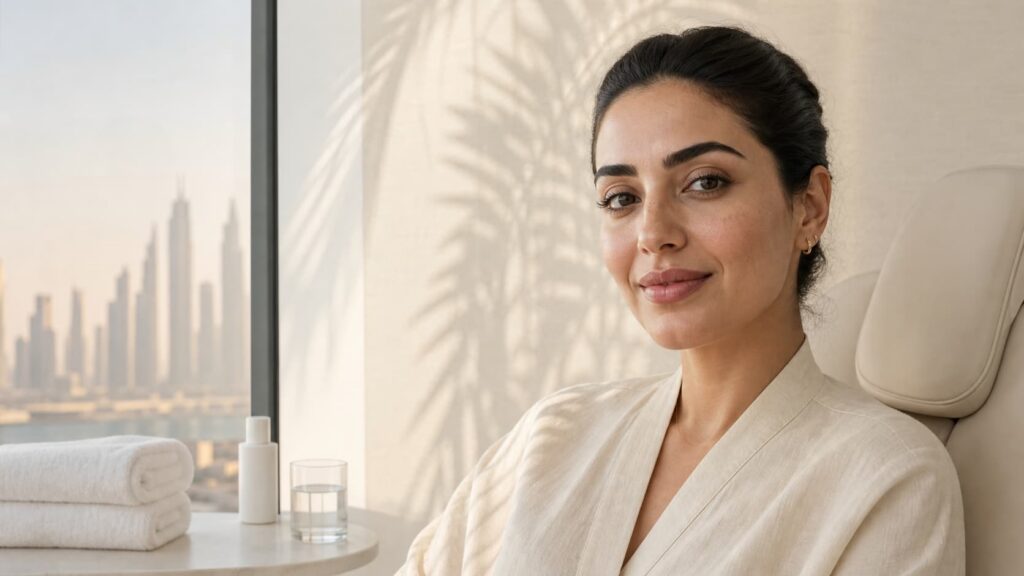
Summer in Dubai changes the way we live. Afternoons move indoors, sunscreen becomes non-negotiable, and even a short walk outside can leave the skin feeling warm, oily or dehydrated. It is only sensible that our approach to aesthetic treatments should change with the weather too.
That does not mean every procedure needs to be cancelled until winter. Some of the best aesthetic treatments for summer involve little or no surface disruption and can help with concerns made more noticeable by heat, air conditioning, sweat and frequent sunscreen use. Other treatments deserve more careful timing, particularly if they make the skin temporarily sensitive to sunlight.
The real question is not simply, “Can I have this treatment in summer?” It is whether your skin is tanned, irritated or sunburnt, how much sun exposure you expect, and whether you can follow the aftercare properly.
Here is a practical guide to choosing summer aesthetic treatments in Dubai without treating the calendar as the only deciding factor.
Why Dubai summer changes your treatment plan
Strong ultraviolet exposure is only part of the picture. Heat, humidity and constant movement between outdoor temperatures and air-conditioned rooms can leave skin feeling congested on the surface but dehydrated underneath. Melasma and post-inflammatory pigmentation may also become more noticeable.
Procedures that remove or significantly disturb the skin’s protective surface can temporarily make it more vulnerable. If a treatment requires several days of strict sun avoidance, it may not sit comfortably alongside a beach holiday, outdoor work or frequent daytime travel.
Skin tone matters as well. People with medium to deeper skin tones can be more prone to post-inflammatory hyperpigmentation after irritation or heat-based procedures. This does not automatically rule out treatment, but it makes correct device settings, preparation and aftercare especially important.
A consultation should therefore consider your actual summer routine, not just the temperature outside.
At a glance: what works now and what may be better later?
| Treatment | Summer suitability | Important consideration |
|---|---|---|
| HydraFacial | Usually summer-friendly | Customise acids and serums for sensitive skin |
| Skin boosters | Often suitable | Allow for temporary swelling or bruising |
| Forma radiofrequency | Often suitable | Skin must not be sunburnt or irritated |
| Selected injectables | Often suitable | Follow heat, exercise and massage restrictions |
| Medium or deep chemical peels | Often better postponed | Require strict sun avoidance while healing |
| Fractional resurfacing and IPL | Depends on sun exposure | Tanned or recently sun-exposed skin may not be suitable |
| Laser hair removal | Possible with precautions | Treatment should not be performed over a fresh tan |
Suitability always depends on an individual assessment.
1. HydraFacial for cleansing and hydration
A HydraFacial in Dubai is a sensible starting point when skin feels dull, congested or dehydrated. The treatment combines cleansing, gentle exfoliation, extraction and serum delivery without the recovery associated with deeper resurfacing.
This can be particularly helpful during summer, when sweat, oil, makeup and repeated sunscreen application may contribute to blocked pores. At the same time, air conditioning can leave the skin feeling tight and short of moisture.
A HydraFacial does not mean the same protocol for everyone. Strong exfoliating steps may need to be reduced if your skin is reactive, recently sun-exposed or already using retinoids and acids at home. Tell your practitioner about every active product you use, including prescription skincare.
Most people can return to their normal routine quickly, although daily broad-spectrum sunscreen remains essential. If you have active inflammation, a rash or sunburn, the right decision may be to calm the skin before treating it.
2. Skin boosters for skin-quality concerns
Dehydration can make fine lines and uneven texture look more obvious, even when someone drinks plenty of water. This is where professionally selected skin boosters in Dubai may be considered.
Unlike a facial moisturiser, an injectable skin booster is placed within the skin. Depending on the product and treatment plan, it may be used to support hydration, elasticity and overall skin quality rather than to create dramatic facial volume.
Skin boosters can be among the more practical summer options because they do not resurface the outer layers of the skin. They are still medical treatments, however. Small bumps, tenderness, redness, swelling or bruising can occur after injections. It is worth scheduling treatment away from an important event or a flight if you are prone to swelling.
Your practitioner may also ask you to avoid strenuous exercise, saunas, steam rooms, swimming or excessive heat for a short period. Follow the instructions provided for your particular product rather than relying on generic online advice.
3. Forma radiofrequency for a firmer appearance
For someone concerned about mild laxity or loss of definition, Forma radiofrequency treatment offers a non-invasive approach that does not remove the skin’s surface.
Forma delivers controlled radiofrequency energy to warm the deeper tissue. Treatment plans are generally designed to support collagen and improve the appearance of firmness gradually. There may be temporary warmth or redness, but the recovery is usually lighter than with fractional resurfacing.
Because the skin is not being deliberately peeled or ablated, Forma may be one of the best aesthetic treatments for summer for an appropriate patient. That does not make it suitable for sunburnt, inflamed or heat-irritated skin. Device settings and treatment intervals must still be selected for your skin condition, tone and medical history.
4. Carefully selected injectable treatments
Some injectable treatments can be performed during summer because they do not depend on removing sun-damaged surface skin. Depending on your concern, a medical practitioner may discuss wrinkle-relaxing treatment, dermal fillers or other anti-ageing injections.
These procedures are not casual beauty appointments. Product selection, facial anatomy, medical history and realistic expectations all matter. Bruising, tenderness and swelling are possible, and certain activities may be restricted temporarily.
If you are flying, attending a wedding or leaving for a beach holiday, do not book injectables at the last minute. A little breathing room allows initial swelling or bruising to settle and gives you time to contact the clinic if you have a concern.
Treatments that may be worth postponing
“Wait” does not necessarily mean a procedure is unsafe throughout summer. It means the timing may be unhelpful if you are tanned, spending time outdoors or unable to protect healing skin.
Medium and deep chemical peels
A superficial peel may sometimes be performed during summer when it is carefully selected and the patient can follow sun-protection instructions. Medium and deep peels are different. They create more visible peeling and require a longer healing period.
The American Academy of Dermatology advises total sun avoidance while skin heals after medium and deep peels. It also notes that daily sunscreen is needed after healing. If you cannot realistically avoid the sun, postponing a stronger chemical peel is the more sensible choice.
This is especially important if you have melasma, a recent tan or a history of post-inflammatory pigmentation. An aggressive peel chosen without considering skin tone can leave you treating a new pigment problem instead of the original one.
IPL and fractional laser resurfacing
Many laser treatments in Dubai are offered year-round, but “available” and “appropriate today” are not the same thing.
Treatments such as Lumecca IPL target pigment with light energy. Fractional procedures such as iPixel Harmony deliberately create controlled areas of resurfacing. Both demand thoughtful sun management.
The American Academy of Dermatology warns that performing laser treatment on tanned or sunburnt skin can increase the risk of burns and discolouration. More intensive resurfacing also requires careful protection while the skin heals.
If you have a fresh tan, spend long periods driving in daylight or have a sunny holiday approaching, it may be better to create a treatment plan now and begin the more intensive sessions when your exposure is easier to control.
Laser hair removal on recently tanned skin
Laser hair removal at The Reformery may still be possible during summer, particularly on areas normally covered by clothing. The important issue is whether the treatment area has been recently tanned or sunburnt.
The American Academy of Dermatology advises patients not to tan and to use broad-spectrum, water-resistant SPF 30 or higher before laser hair removal. It also states that a tan may need to fade before treatment can safely continue.
Be honest about recent sun exposure, self-tanner and upcoming travel. Concealing a tan so that a session can go ahead is not worth the risk.
Deeper microneedling and RF microneedling
Microneedling is not automatically a winter-only procedure. However, deeper treatments and RF microneedling can create redness, sensitivity and a short healing period. A beach weekend immediately afterwards is a poor match.
If pigmentation is a concern or you know you cannot avoid heat, sweat and direct sun, postponing treatment may be more practical. A clinician can also advise whether a gentler session or a different summer treatment would meet your goals.
How to plan aesthetic treatments around a Dubai summer
Start with your diary. Tell your practitioner about holidays, outdoor events, exercise habits and how much time you spend driving. Mention recent tanning, sunburn, cold sores, prescription medication and active skincare products.
Then keep the basics consistent:
- Apply broad-spectrum, water-resistant SPF 30 or higher.
- Reapply sunscreen as directed, particularly after sweating.
- Use a hat, sunglasses and shade rather than relying on sunscreen alone.
- Avoid picking, scrubbing or adding strong skincare after a procedure.
- Follow the clinic’s instructions on exercise, swimming, heat and makeup.
- Contact the clinic if redness, swelling, discomfort or pigmentation becomes worse rather than better.
The best plan may combine low-downtime care now with more intensive skin rejuvenation in Dubai later in the year.
Is there one best summer treatment?
No. A HydraFacial may suit someone dealing with congestion, while a skin booster may be more appropriate for dehydration. Forma may appeal to a patient focused on firmness. Someone with a tan or active irritation may benefit most from waiting.
That is why responsible summer aesthetic treatments in Dubai begin with a skin assessment rather than a package chosen from social media.
At The Reformery Clinic, your treatment plan can be shaped around your skin, lifestyle and likely sun exposure. Sometimes the right recommendation is to treat now. Sometimes it is to simplify your home routine and wait. Knowing the difference is part of good aesthetic care.
This article is educational and does not replace an individual medical consultation. Treatment suitability, risks, recovery and results vary between patients.
