
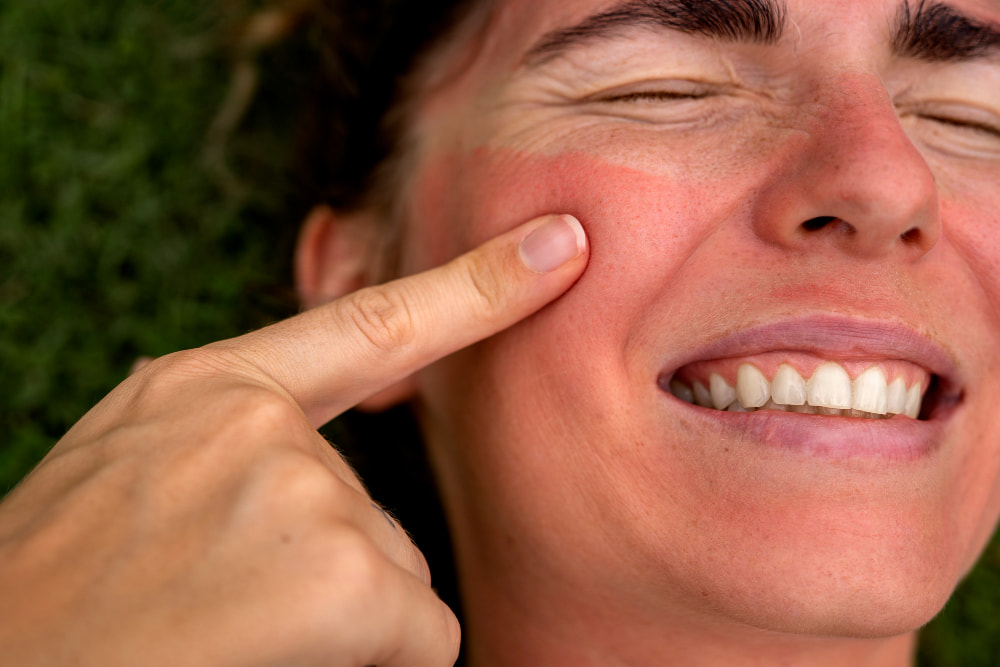
In short: A damaged skin barrier may feel tight, rough, itchy or unusually sensitive, and familiar products may begin to sting. After summer, ultraviolet exposure, heat, perspiration, frequent cleansing and over-exfoliation can contribute. A sensible recovery plan is usually simple: remove likely irritants, cleanse gently, moisturise consistently and protect the skin from further sun while it settles.
Key takeaways
- “Damaged skin barrier” describes impaired protective function; it is not a diagnosis.
- Stinging, flaking and redness can also signal contact dermatitis, eczema, rosacea, sunburn or infection.
- More exfoliation is rarely the answer when the skin already feels raw or reactive.
- A basic cleanser–moisturiser–sunscreen routine is often a safer starting point than a shelf of recovery serums.
- Persistent, painful, blistering or spreading symptoms need medical assessment.
What is the skin barrier?
The skin barrier is mainly associated with the stratum corneum, the outermost part of the epidermis. It is often compared with a brick wall: flattened skin cells form the “bricks”, while lipids such as ceramides, cholesterol and fatty acids help fill the spaces between them.
This structure limits water loss and helps protect the living tissue underneath from irritants, allergens and microbes. When its organisation is disturbed, transepidermal water loss can increase and substances that once felt harmless may become irritating. That is why compromised skin can feel dry and oily at the same time, or suddenly sting when you apply a familiar product.
The phrase “damaged barrier” is useful, but broad. It does not explain why the change has happened. A dermatologist may need to distinguish temporary irritation from allergic contact dermatitis, eczema, rosacea, an infection or another condition that needs specific treatment.
What are the signs of a damaged skin barrier?
Barrier dysfunction often changes how the skin feels before it dramatically changes how it looks. Common clues include:
- tightness or discomfort after cleansing;
- rough, flaky or scaly patches;
- redness or increased flushing;
- itching, tenderness or a burning sensation;
- stinging when applying water, moisturiser or products that were previously comfortable;
- increased sensitivity to heat, sweat or friction;
- small inflamed bumps or breakouts alongside dryness;
- cracks or areas that feel raw.
No single sign proves that the barrier is the cause. Acne, allergy, rosacea and dermatitis can create overlapping symptoms. If the problem is persistent or recurrent, a diagnosis matters more than adding another “barrier repair” product.
Why can skin become more reactive after summer?
Summer does not automatically damage everyone’s barrier. The problem is often the combined effect of exposure, skincare and daily habits.
Ultraviolet exposure and sunburn
Ultraviolet radiation can disrupt components of the stratum corneum and increase water loss. Sunburn is a clear inflammatory injury, but repeated lower-level exposure may also leave skin less resilient. Dubai Health Authority guidance recommends sun protection during summer and advises SPF 50, broad-spectrum and water-resistant sunscreen, alongside protective clothing.
Heat, sweat and friction
Sweat itself is not proof of barrier damage. However, salt, repeated wiping, tight hats or masks and heat-related flushing can aggravate already sensitive skin. Sunscreen and makeup may also be removed unevenly when you sweat and touch the face.
Outdoor humidity and indoor air conditioning
Humidity, temperature and airflow can influence skin hydration and water loss. In Dubai, moving repeatedly between outdoor heat and cooled indoor environments may make tightness more noticeable, especially when the skin is already dry or irritated. This is a contributing context, not a diagnosis.
Over-cleansing and exfoliation
A holiday or hot-weather routine can easily become too aggressive: cleansing more often, using a strong foaming wash, adding an acid toner for congestion, applying a retinoid at night and scrubbing away visible flakes. Each step may be tolerable alone, but the combination can exceed what the skin currently handles.
New products and contact dermatitis
A new sunscreen, fragrance, essential oil, hair product or “natural” botanical can cause irritation or allergy. Allergic contact dermatitis may not appear the first time a product is used. If a rash keeps returning, spreads beyond the application area or fails to settle after the suspected product is removed, dermatologist-led assessment and, in suitable cases, patch testing may be appropriate.
An underlying skin condition
Eczema, rosacea, psoriasis and acne can all involve barrier dysfunction or sensitivity. Treating every flare as simple dehydration may delay the right care. The goal is not only to moisturise the surface but to identify and manage the cause.
A dermatologist-led skin barrier recovery plan
The best recovery plan is usually quieter than social media suggests. It should reduce variables, protect the skin and create a clear point at which to seek help.
| Phase | What to do | What to avoid |
|---|---|---|
| First 72 hours | Stop newly introduced or non-essential products; use lukewarm water, a gentle fragrance-free cleanser if needed, a plain moisturiser and sun protection | Scrubs, cleansing brushes, peels, retinoids, strong acids, fragranced products and picking flakes |
| Following 1–2 weeks | Keep the routine consistent; moisturise after cleansing and when skin feels dry; note changes in pain, rash, swelling and product tolerance | Adding several “repair” products at once or booking resurfacing over inflamed, sunburnt or raw skin |
| Once comfortable and stable | Reintroduce one active product at a time, slowly; stop if irritation returns | Restarting every active on the same day or increasing strength to make up for lost time |
| If symptoms persist or worsen | Arrange a dermatology assessment and bring a list or photographs of all products and recent treatments | Self-diagnosing a persistent rash or using prescription creams borrowed from someone else |
These phases are practical checkpoints, not a promise that every barrier will recover on a fixed schedule.
Step 1: pause potential irritants
Temporarily set aside exfoliating acids, scrubs, retinoids and other non-essential products that burn or sting. If a product has been prescribed, ask the prescriber before changing it. Do not compensate for flaking by exfoliating more; that can prolong irritation.
Step 2: cleanse gently
Use lukewarm rather than hot water. Choose a mild, fragrance-free cleanser and avoid repeated washing unless sweat, sunscreen or makeup needs to be removed. Pat rather than rub the skin dry.
Step 3: moisturise consistently
A moisturiser helps reduce water loss and improve comfort. Useful formulations may combine humectants, which attract water, with emollient or occlusive ingredients that smooth the surface and slow evaporation. Glycerin, ceramides, dimethicone and petrolatum are common examples, but no ingredient suits everyone.
“Fragrance-free” is generally more useful than “unscented”: unscented products may still contain ingredients that mask odour. Apply moisturiser while the skin is slightly damp if that feels comfortable. For acne-prone skin, a lighter non-comedogenic formula may be easier to tolerate than a heavy ointment across the whole face.
Step 4: prevent further ultraviolet exposure
Use shade, a hat, protective clothing and a broad-spectrum, water-resistant sunscreen. Dubai Health Authority’s summer guidance recommends SPF 50. If every sunscreen stings, do not keep trialling multiple formulas on inflamed skin in quick succession. Increase physical protection and ask a dermatologist to help identify a tolerable option.
Step 5: wait before resurfacing
Peels, microdermabrasion, microneedling and laser resurfacing deliberately alter or injure the skin in controlled ways. That can be useful for the right concern at the right time, but it is not the first response to active burning, rash, sunburn or open skin. Let a clinician confirm that the barrier and inflammation have stabilised before planning a procedure.
How long does skin barrier recovery take?
There is no reliable universal countdown. Mild irritation may improve after the trigger is removed and a simple routine is used, while allergic contact dermatitis, eczema, infection or a more significant sunburn may take longer and need medical treatment.
Progress is better judged by function than by a date: cleansing no longer hurts, moisturiser feels comfortable, flaking and redness are decreasing, and the skin is less reactive to heat or sweat. If symptoms are not clearly improving, or repeatedly return when one product is reintroduced, book an assessment rather than escalating home treatment.
When should you see a dermatologist?
Arrange a dermatology appointment if the rash is persistent, recurrent, spreading or painful; if moisturiser repeatedly burns; or if you suspect eczema, rosacea or contact allergy. Seek prompt medical help for blistering, open or raw skin, eye or lip involvement, fever, rapidly spreading rash, or signs of infection such as pus, golden crusting, increasing warmth, swelling or pain. Breathing difficulty or swelling of the lips or eyes may require emergency care.
A consultation can review the timeline, skincare, prescriptions, sun exposure and recent treatments. At The Reformery’s medical dermatology service, the clinic states that assessment may include skin analysis, diagnosis and, where appropriate, patch testing. The outcome may be a simplified home routine, prescription treatment, delayed procedure planning or referral—not necessarily an aesthetic treatment.
A measured next step at The Reformery in Dubai
If your skin has become reactive after summer, begin by doing less and observing more. Keep a list of everything used on the face, including sunscreen, hair products and prescription skincare, and note when symptoms began.
At The Reformery in Dubai Hills Estate, dermatologist Dr Ashraf Ezzedeen can assess whether the problem is temporary irritation or a condition requiring targeted care. Once the skin is comfortable and stable, a separate conversation can address remaining pigmentation, texture or dehydration. Contact The Reformery to arrange an individual assessment.
FAQs
Can oily skin have a damaged barrier?
Yes. Oil and water are different, so skin can feel greasy yet tight, flaky or dehydrated. Irritation can also coexist with acne. Avoid assuming that more cleansing or exfoliation will correct the oiliness; if breakouts and sensitivity appear together, a dermatologist can help separate acne treatment from barrier support.
Should I stop retinol if my skin barrier is damaged?
If an over-the-counter retinoid is causing burning, marked peeling or tenderness, pausing it while the skin settles may be sensible. If the retinoid or another active was prescribed, contact the prescriber before changing the plan. When the skin is comfortable again, reintroduction should be gradual and individualised.
Are ceramides essential for skin barrier repair?
Ceramides are important lipids in the stratum corneum, and ceramide-containing moisturisers may support hydration and barrier function. They are not the only useful option, and formulation matters. A simple moisturiser you tolerate and use consistently is more helpful than a complex “barrier” product that stings or triggers a rash.
Can I exfoliate flaky skin to make it smooth again?
Not while the skin is burning, raw or unusually sensitive. Scrubs, brushes and acids can remove more of the already disrupted outer layer and prolong irritation. Moisturise, avoid picking and wait until the skin is stable. Persistent scale may be dermatitis or another condition and deserves assessment.
Is a facial the fastest way to repair a damaged barrier?
Not necessarily. An exfoliating or extraction-heavy facial may worsen active irritation. A professional treatment should follow diagnosis and stabilisation, not replace them. If the skin is inflamed, sunburnt or broken, the safest recommendation may be a basic home routine and time rather than an immediate procedure.
How do I know whether it is barrier damage or contact dermatitis?
You cannot always tell from appearance alone. Contact dermatitis may itch, burn, swell or form a rash after exposure to an irritant or allergen, and it can recur with the same trigger. A dermatologist may use the history, examination and sometimes patch testing to distinguish it from other causes.
Can I keep wearing sunscreen if it stings?
Ultraviolet protection remains important, but repeated stinging means the formulation or the condition of the skin needs attention. Do not test several new products at once. Use shade, a hat and protective clothing, and ask a dermatologist to recommend a suitable sunscreen while the skin settles.
Disclaimer
This article provides general educational information and does not diagnose a skin condition or replace a medical consultation. Symptoms described as a “damaged skin barrier” can overlap with dermatitis, rosacea, eczema, infection and other conditions. Product and treatment suitability varies. Seek urgent medical care for breathing difficulty, facial swelling, a rapidly spreading or painful rash, fever, extensive blistering, or signs of infection. Final copy should be reviewed by The Reformery’s qualified dermatologist and compliance team before publication.
