
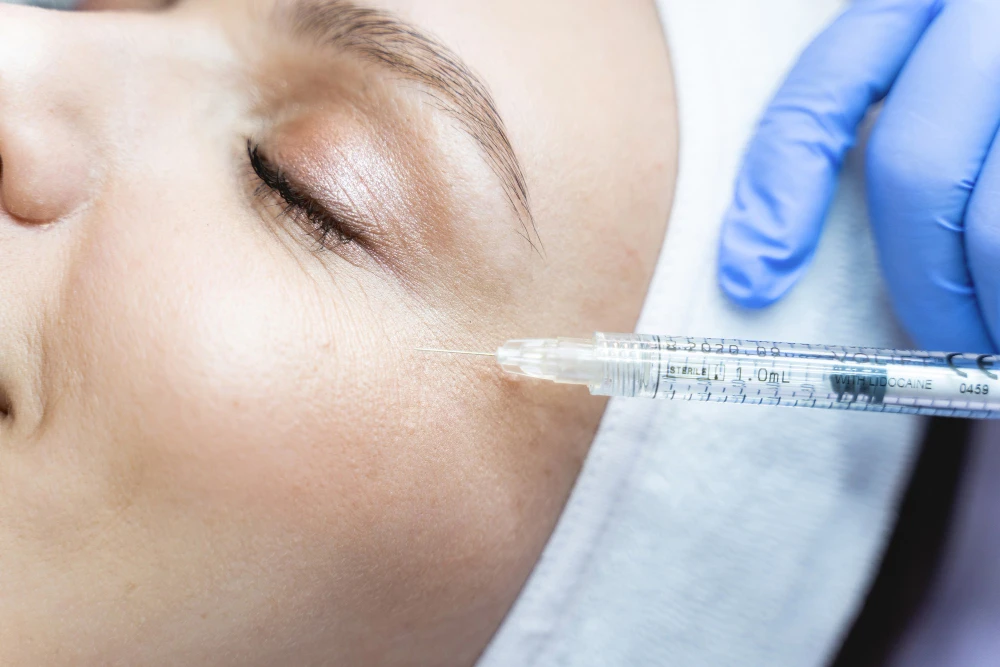
The under-eye area is small, but deciding how to treat it is rarely simple. A shadow may come from a true tear-trough hollow. Fine lines can be caused by thin, dehydrated skin. Pigment, visible blood vessels, prominent fat pads and fluid retention can create a tired look too.
That distinction matters when comparing under-eye polynucleotides vs tear trough filler. Polynucleotides are generally used to support skin quality; filler is used to replace or redistribute volume. Neither treatment is automatically the safer choice, and neither corrects every cause of dark circles or under-eye bags. Start with a face-to-face assessment by a licensed medical practitioner.
The short answer: which option may suit you?
Under-eye polynucleotides may be considered when the main concern is crepey texture, fine lines, dryness or reduced elasticity and little extra volume is wanted. Tear-trough filler may be considered when a genuine hollow or volume transition is creating a shadow and the surrounding skin and anatomy are suitable.
That is not a safety ranking. Both are injectable treatments with possible complications. Product, dose, anatomy, medical history and practitioner experience all affect risk. Sometimes the appropriate advice is to postpone injections or consider a different route.
What are under-eye polynucleotides?
Polynucleotides are purified DNA fragments, often derived from salmon or trout sources and processed for injectable use. You may also see PN, PDRN or “salmon DNA”, although formulations are not interchangeable. Your practitioner should explain the exact product proposed and its intended use.
Unlike a conventional volumising filler, a polynucleotide eye treatment is intended primarily to improve the condition and appearance of the skin. Research suggests possible improvements in wrinkles, texture and elasticity, but the evidence is still developing. A 2024 systematic review included only nine studies and 219 patients, and rated the available studies as low or moderate quality. That makes polynucleotides promising, not proven to solve every under-eye concern.
Treatment is often planned as a course, with timing determined by the product and patient. Temporary bumps, swelling, redness, tenderness and bruising may follow. Infection, inflammatory reactions and other injection-related complications are possible, so “no downtime” or “risk-free” would be misleading.
Patients researching under-eye polynucleotides Dubai can read more about Salmon DNA injections at The Reformery and the clinic’s broader skin booster treatments. Suitability and the expected treatment course still need to be confirmed during consultation.
What is tear-trough filler?
Tear-trough filler usually refers to a carefully selected hyaluronic acid gel placed to soften the depression between the lower eyelid and upper cheek. It does not rebuild the skin in the same way proposed for polynucleotides; its job is structural. By changing the transition between two areas, it may reduce a shadow caused by volume loss.
Results can be visible soon, but swelling may disguise the final effect. The under-eye has thin skin and limited tolerance for excess product, so more is not necessarily better.
Common reactions include swelling, bruising, tenderness and redness. Other possible complications include persistent oedema, lumps, asymmetry, product visibility, a blue-grey Tyndall effect, migration, infection or a delayed inflammatory response. A meta-analysis of 31 reports involving 2,556 participants found pooled rates of 19.2% for swelling or oedema and 18.4% for bruising; study methods and techniques varied.
Vascular occlusion is uncommon but serious. Filler entering or compressing a blood vessel can damage skin and, in extremely rare circumstances, threaten vision. Hyaluronic acid filler can often be dissolved with hyaluronidase, but reversibility should not be treated as a guarantee against harm. Anyone considering tear trough filler Dubai should ask who performs the procedure, how complications are recognised and what emergency protocol is available.
The Reformery’s dermal filler service provides further treatment information.
Under-eye polynucleotides vs tear trough filler at a glance
| Question | Under-eye polynucleotides | Tear-trough filler |
|---|---|---|
| Main purpose | Support skin quality, hydration and texture | Soften a structural hollow or volume transition |
| Adds noticeable volume? | Usually not the primary aim | Yes, in a controlled amount |
| Best matched concern | Fine lines, crepey or dehydrated-looking skin | A true tear-trough depression creating shadow |
| Result pattern | Gradual and commonly planned as a course | Often visible earlier, after swelling settles |
| Common short-term effects | Small bumps, swelling, redness, tenderness and bruising | Swelling, bruising, tenderness and redness |
| Important limitations | Evidence remains limited; will not fill a marked hollow | Can worsen puffiness in unsuitable anatomy; does not treat pigment or skin texture |
This comparison is educational, not a recommendation. Treatment schedules, longevity and risks vary by product and patient.
When polynucleotides may be discussed
A practitioner may raise under-eye polynucleotides vs tear trough filler when the under-eye skin looks thin or finely lined but there is no substantial volume deficit. Someone who wants a subtle skin-quality approach rather than a change in facial contour may also prefer to discuss polynucleotides.
They are not a universal fix for dark circles. Brown pigmentation, visible vessels, eczema, allergy-related rubbing, sleep disruption and genetics need different conversations. Polynucleotides are also not a substitute for surgery when prominent fat pads or significant skin laxity are the dominant issue.
Tell your practitioner about allergies, pregnancy or breastfeeding, autoimmune conditions, active infection, previous reactions, medicines and supplements. Precautions are product-specific; an online checklist cannot replace a medical assessment.
When tear-trough filler may be discussed
Filler may make sense when examination confirms a defined hollow, the lower eyelid-cheek junction can be improved with conservative support and there is no strong tendency toward fluid retention. Mid-cheek volume loss can sometimes contribute to the appearance of a tear trough, so assessment should include the face as a whole rather than the hollow in isolation.
Filler may be a poor match when puffiness, festoons, prominent eye bags, very thin skin or lymphatic swelling dominate. It also cannot remove pigment. Adding gel to the wrong problem can make the area appear heavier, which is why a practitioner should be willing to say no.
What makes an under-eye consultation safer?
A useful consultation goes beyond choosing from a menu. The practitioner should examine your anatomy, consider previous procedures and review your health history. They should explain the product, placement, realistic outcome, alternatives, aftercare and warning signs.
Ask these questions:
- What is causing my under-eye concern: hollowing, skin quality, pigment, vascular show, fluid or fat pads?
- What common and serious complications should I understand?
- Who will inject me, and what qualifications and experience do they hold?
- What happens if I develop persistent swelling, unusual pain, skin colour change or a visual symptom?
- Would no treatment, skincare, dermatology input or surgical assessment be more appropriate?
For sudden severe pain, blanching or mottled skin, or any change in vision during or after an injectable treatment, seek urgent medical attention and contact the treating clinic immediately.
Can the two treatments be combined?
Sometimes a staged plan includes more than one treatment because skin quality and volume are separate concerns. That does not mean they belong in the same appointment or suit everyone. A cautious plan may address the leading concern first, let swelling settle and then reassess. Previous filler should be identified before more product is placed.
For broader under-eye rejuvenation Dubai options, explore The Reformery’s injectable services or arrange a personalised consultation. The goal of the appointment should be an appropriate plan, not an assumption that a procedure must be performed.
Frequently asked questions
Are polynucleotides filler?
No. Polynucleotides are used mainly as a skin-quality injectable, whereas tear-trough filler is a gel used to add controlled structural volume. Product formulations and approved uses differ.
Which treatment works better for dark circles?
It depends on the cause. Filler may soften shadow from a hollow; polynucleotides may be discussed for thin, crepey skin. Neither directly corrects every pigmentary, vascular or lifestyle-related dark circle.
Is tear-trough filler reversible?
Hyaluronic acid filler can often be broken down with hyaluronidase. Dissolving is itself a medical procedure with risks, and it does not guarantee reversal of every complication.
Which treatment has less downtime?
Both can cause visible swelling and bruising. Polynucleotide injection points may leave temporary bumps, while filler swelling can occasionally last longer. Personal response and technique matter, so leave time before an important event.
A decision based on diagnosis, not trend
The practical answer to under-eye polynucleotides vs tear trough filler is not that one treatment wins. Polynucleotides and filler do different jobs, carry different limitations and depend on careful patient selection. If texture is the issue, adding volume may miss the point. If a pronounced hollow is the issue, a skin-quality injectable may not create the structural change expected.
At The Reformery in Dubai Hills Estate, a consultation can assess the concern and discuss options, potential benefits, risks and alternatives. Results vary, and no aesthetic treatment can be guaranteed.
