
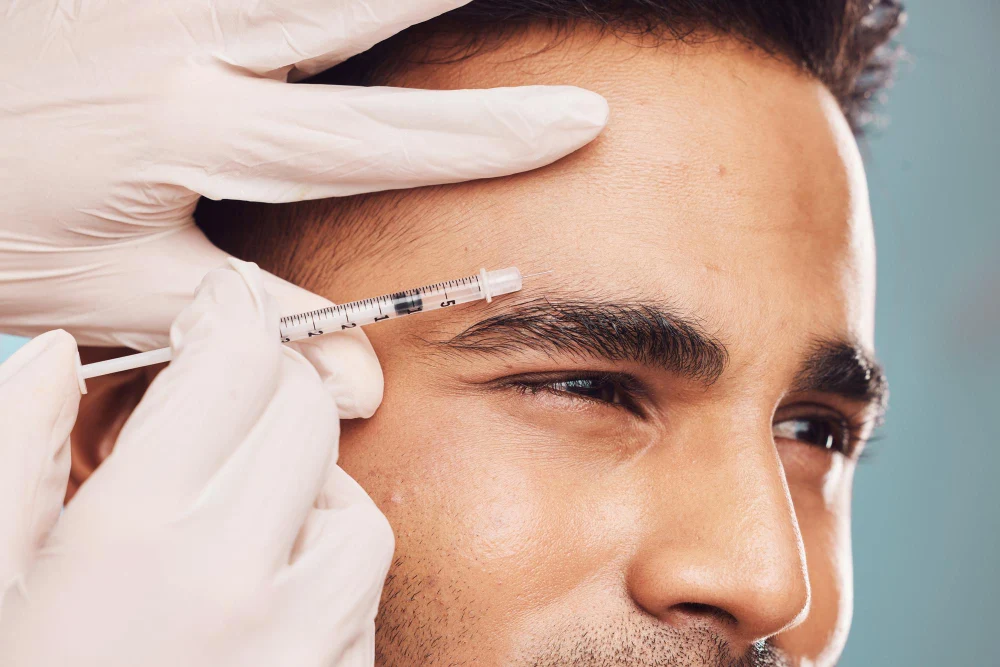
The first question people tend to ask about preventative Botox is, “Am I too young—or have I left it too late?” A better question is: what happens to your lines when your face is at rest?
There is no standard birthday for beginning treatment. One person may notice a faint frown line lingering in their late twenties; another may reach their forties with very few visible lines. Genetics, anatomy, sun exposure, smoking, skincare and facial movement all influence that timing.
For someone considering preventative Botox in Dubai, the sensible starting point is not an age or a trend. It is a face-to-face assessment with a qualified, licensed practitioner who can watch how your face moves, discuss what bothers you and explain whether treatment is appropriate at all.
The short answer: when should you start Botox?
You may consider a consultation when expression lines begin to remain visible after your face relaxes and those lines genuinely concern you. You do not need to begin simply because you have reached your mid-twenties or thirties. If your skin is smooth at rest, you like the way it looks and you are not bothered by early lines, there may be nothing to treat.
“Preventative” does not mean preventing normal ageing. Botulinum toxin temporarily reduces the activity of selected muscles. This can soften dynamic lines—the creases created by frowning, raising the eyebrows or smiling—and may reduce repeated folding over time. It cannot stop ageing, replace sunscreen or promise that a line will never form.
What is preventative Botox?
Botox is a brand name commonly used when discussing botulinum toxin injections. The treatment works by temporarily relaxing specifically selected muscles. In aesthetic practice, common areas include frown lines between the eyebrows, horizontal forehead lines and crow’s feet around the eyes.
The word “preventative” describes the timing and intention, not a different product. The aim is usually to soften repetitive movement before a crease becomes established while retaining expression. A suitable plan may involve fewer areas, a conservative dose or no treatment after assessment.
That distinction matters. Preventative Botox in Dubai should still be treated as a medical procedure, even when the changes requested are modest. Product choice, dose, placement, facial anatomy and follow-up all affect the result and the risk profile.
Signs that it may be worth having a consultation
If you are wondering when to start Botox, look at your face in ordinary daylight rather than under a harsh light or phone filter. A consultation may be worthwhile if:
- A forehead, frown or eye-area line remains faintly visible when your face is fully relaxed.
- You want to soften a specific expression line, not change the character of your whole face.
- You understand that the effect is temporary and are prepared to discuss your health, medicines and previous procedures.
These are prompts for a professional conversation, not a self-diagnosis checklist. Some visible lines are related more to sun damage, dehydration, texture or volume change than muscle movement. In those cases, Botox may not be the most useful answer.
How do you keep preventative Botox looking natural?
Natural-looking Botox comes from thoughtful decisions. A result should suit your anatomy and preferred level of movement, not a copied injection map or somebody else’s photograph.
1. Start with movement, not units
Your practitioner should assess your face at rest and in motion, asking you to frown, smile, squint and raise your brows. This reveals muscle strength, brow support and asymmetry. The same dose can affect different faces differently, so an online recommendation is not a treatment plan.
2. Say what “natural” means to you
For one person, natural-looking Botox means keeping forehead movement. For another, it means softening a frown without changing the brow shape. “I want to look less tense, but I still want my eyebrows to move” gives a clinician a clearer target for subtle Botox results than “make me look younger.”
3. Treat only what needs treating
Preventative treatment does not require every available area to be injected. A focused plan may be more appropriate. Facial muscles work in balance, so weakening one area can influence another.
4. Review before adding more
The effect commonly begins within several days but takes time to settle. The Reformery advises assessing the full effect at around two weeks. A review allows symmetry and remaining movement to be evaluated before any adjustment.
5. Avoid treating by calendar alone
Results are temporary and vary. Many patients notice an effect for roughly three to four months, although it can be shorter or longer. A new assessment should confirm that movement has returned and another session is appropriate.
What Botox can—and cannot—address
A carefully planned Botox treatment in Dubai may soften expression-related lines, but it is not designed to correct every sign of skin ageing.
If the main concern is dehydration, crepey texture or a loss of glow, the clinician may discuss skin booster injections instead of, or separately from, toxin treatment. If a crease is connected to volume loss, dermal fillers may be considered after an anatomical assessment. These treatments do different jobs and are not interchangeable.
Daily habits still matter. Broad-spectrum sunscreen, avoiding tanning, not smoking and sensible skincare can help reduce avoidable skin ageing. Dubai’s year-round ultraviolet exposure makes photoprotection particularly relevant. Botox does not repair sun damage.
At The Reformery, the personalised consultation approach begins with assessment rather than assuming that every enquiry needs a procedure. That is especially important for first-time patients seeking subtle Botox results.
Safety, suitability and possible side effects
Botulinum toxin injections should be carried out in an appropriately licensed medical setting by a qualified practitioner. Before treatment, share your full medical history, allergies, current medicines and supplements, and all recent aesthetic or surgical procedures. Tell the clinician if you have a neuromuscular condition, an infection near the planned injection area, or previous problems with a botulinum toxin product.
Cosmetic botulinum toxin is generally not recommended during pregnancy or breastfeeding. Suitability must be decided individually; this article cannot replace medical advice.
Temporary effects may include redness, tenderness, swelling, bruising or headache. Less common complications include asymmetry or temporary eyelid or brow drooping. Rare but urgent symptoms, such as difficulty swallowing, speaking or breathing, require immediate medical attention. Your practitioner should explain benefits, alternatives and risks before consent.
What to expect at The Reformery
A consultation for Botox treatment in Dubai should include a discussion of your goals, a review of facial movement and an individual assessment of whether treatment is suitable. If you proceed, the injections themselves are usually brief. Small marks, redness, swelling or bruising can occur, even though many people return to normal daily activities soon afterwards.
Follow the aftercare given by your own practitioner. General advice often includes avoiding rubbing or massaging the treated areas and postponing strenuous exercise for the period advised. Do not rely on social-media instructions in place of your clinic’s guidance.
Frequently asked questions
What is the best age to start preventative Botox?
There is no universally recommended age. Consider an assessment when dynamic lines begin to linger at rest and they bother you. Anatomy, muscle strength, skin condition, health and personal preference matter more than a number.
Can Botox prevent wrinkles permanently?
No. Its effect is temporary. It can reduce selected muscle movement and soften expression lines for a period, but it does not stop ageing or permanently prevent wrinkles.
Will preventative Botox make my face look frozen?
It can reduce movement, and an overly aggressive or unsuitable plan may look unnatural. Careful assessment, precise placement and a conservative, individualised goal can help preserve expression, but no particular result can be guaranteed.
How long does preventative Botox last?
Often around three to four months, but the duration varies with the person, treatment area, dose and other factors. Your clinician can advise when reassessment is appropriate.
Is preventative Botox right for everyone?
No. Some people do not need it, are not suitable candidates or would benefit more from skincare or another approach. A medical consultation is necessary before deciding.
The most natural starting point is an honest consultation
The best answer to when to start Botox is personal: start only if there is something you want to soften, your practitioner considers treatment appropriate and you understand the temporary benefits and possible risks. There is no prize for beginning early.
If you are considering preventative Botox in Dubai, contact The Reformery in Dubai Hills for an individual assessment. The aim of the conversation should be straightforward—understand your face, protect normal expression and choose only the treatment that fits you.
This article is for general educational purposes and is not a substitute for diagnosis, medical advice or an in-person consultation. Individual suitability, treatment response, recovery and results vary.
