
Noticing more hair in the shower or a parting that seems wider than it used to be can feel unsettling. The natural response is often to search for the newest or most powerful treatment available. That search increasingly leads to one question: when comparing PRP vs exosomes for hair loss, which option works better?
The short answer is that PRP currently has a broader body of human clinical evidence for pattern hair loss. Exosome-based treatments are attracting attention because of their regenerative potential, but the research is newer, products are less standardised and important regulatory questions remain.
That does not mean everyone should automatically choose PRP. Hair shedding can have several causes, and neither treatment can compensate for an inaccurate diagnosis. The best place to begin is a medical assessment of the scalp, hair-loss pattern, health history and possible underlying triggers.
What causes hair loss?
Hair loss is not a single condition. Genetics, hormonal changes, iron or vitamin deficiencies, thyroid disorders, stress, illness, medication and inflammatory scalp conditions can all affect the hair-growth cycle. Male and female pattern hair loss, medically known as androgenetic alopecia, is only one possibility.
This distinction matters. A person with pattern thinning may be considered for regenerative treatment, while someone experiencing sudden shedding after an illness may need a different approach. Active scalp inflammation, scarring alopecia or an untreated nutritional deficiency also requires appropriate medical attention.
At The Reformery, patients can begin with a personalised hair loss treatment consultation or a broader medical dermatology assessment. Establishing the cause first helps avoid spending time on a treatment that does not suit the condition.
What is PRP hair treatment?
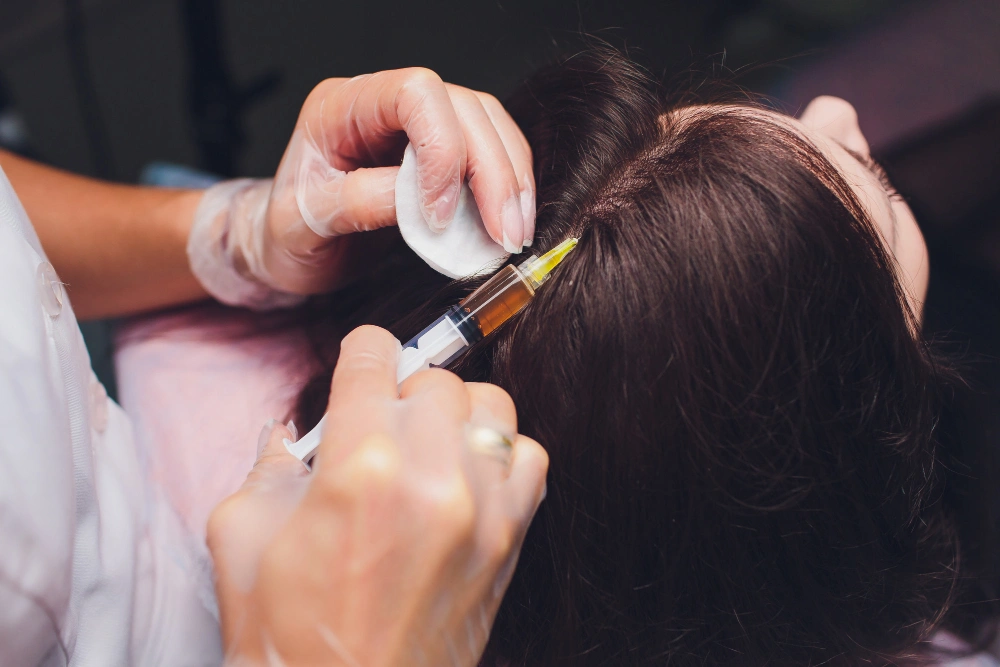
Platelet-rich plasma, or PRP, is prepared from a small sample of the patient’s own blood. The sample is processed to separate plasma containing a concentrated level of platelets. A qualified medical professional then administers the prepared PRP to selected areas of the scalp.
Platelets release signalling proteins and growth factors involved in tissue repair. In hair restoration, the aim is to support follicle activity and improve the environment around functioning hair follicles. PRP does not create entirely new follicles, and it is unlikely to restore hair in an area where follicles are no longer viable.
A PRP hair treatment in Dubai may be considered for adults with early or moderate pattern thinning. Treatment normally involves a planned series of sessions followed by assessment or maintenance where clinically appropriate. Protocols vary because PRP concentration, preparation systems and treatment intervals are not identical across clinics.
Research is encouraging but not absolute. A 2024 systematic review found that several included studies reported improvements in hair density or count, although the authors also highlighted inconsistent protocols, variable study quality and the need for stronger research. A separate meta-analysis of randomised trials reported an improvement in hair density at three and six months compared with placebo. These findings support PRP as a reasonable option for selected patients, not as a guaranteed cure.
What is exosome hair treatment?
Exosomes are microscopic extracellular vesicles released by cells. They carry proteins, lipids and genetic signals between cells. Researchers are exploring whether these signals can influence inflammation, tissue repair and processes associated with the hair-growth cycle.
An exosome hair treatment in Dubai may involve applying an exosome-containing preparation to the scalp, sometimes alongside a procedure that creates controlled microchannels. The exact source, formulation, concentration and method of administration can differ considerably between products and providers.
This lack of standardisation is one of the most important points for patients to understand. “Exosome treatment” is not one universally defined procedure. Product origin, manufacturing controls, storage and sterility all matter.
Early clinical reports are promising, and a systematic review of studies published through May 2025 found potential across different forms of hair loss. However, the overall clinical evidence remains limited compared with more established therapies. Larger controlled trials, longer follow-up periods and consistent treatment protocols are still needed.
Patients should also ask about local authorisation and the regulatory status of the specific product. For context, the US Food and Drug Administration states that it has not approved any exosome products. Regulations differ between countries, so this statement should not be treated as a ruling on availability in Dubai; it does show why product-level verification is essential. (FDA safety notification)
PRP vs exosomes for hair loss: the key differences
| Consideration | PRP | Exosome-based treatment |
|---|---|---|
| Source | Prepared from the patient’s blood | Cell-derived extracellular vesicle product |
| Evidence for hair loss | Broader human evidence, although protocols vary | Promising but earlier and less standardised |
| Product variability | Depends on blood processing and PRP protocol | Depends heavily on source, manufacturing and formulation |
| Allergy considerations | Low allergy potential because it is autologous | Depends on the specific product and its components |
| Downtime | Usually limited; temporary tenderness, redness or swelling may occur | Depends on the product and delivery method |
| Best-established role | Adjunctive treatment for selected cases of early-to-moderate pattern thinning | Emerging option requiring careful product and patient evaluation |
| Results | Variable and gradual | Variable; long-term comparative data remain limited |
Which treatment works best?
For most people asking about PRP vs exosomes for hair loss, PRP is presently the more evidence-supported choice. It has been examined in more human trials, uses material prepared from the patient’s own blood and has been used clinically for longer.
Exosomes may eventually play a larger role in non-surgical hair restoration, but “newer” should not be confused with “proven to be better.” There is not yet enough high-quality head-to-head evidence to conclude that exosome treatment consistently outperforms PRP.
The appropriate answer also depends on the individual. A clinician may consider factors such as:
- The cause and duration of hair loss
- Whether follicles remain active in the thinning area
- The presence of scalp inflammation or infection
- Current medication and medical conditions
- Pregnancy, breastfeeding or blood-related disorders
- Previous treatments and response
- The product’s regulatory status and administration method
- The patient’s expectations, budget and tolerance for maintenance
In some cases, neither option will be the first recommendation. Medical treatment, nutritional correction or management of a scalp condition may need to come first. A consultation should produce a diagnosis and treatment rationale, not simply a procedure booking.
What should you expect from treatment?
Hair grows slowly, so responsible treatment planning requires patience. Changes are usually assessed over months rather than days. Standardised photographs and scalp measurements may help track density, part width and shedding more reliably than memory alone.
Temporary redness, tenderness, swelling or pinpoint bleeding can occur after scalp procedures. Individual risk varies according to the technique, medical history and products used. Patients should receive clear information about possible adverse effects, aftercare and when to contact the clinic.
It is equally important to discuss what treatment cannot do. PRP and exosome-based approaches cannot guarantee regrowth, may not help advanced follicle loss and do not permanently remove the biological causes of hereditary thinning. Maintenance or combination care may be discussed based on clinical need.
Choosing a hair loss treatment in Dubai
When comparing clinics, ask who will diagnose the condition, who will perform the procedure and how the treatment plan will be monitored. For exosome-based care, request the product name, source, storage requirements, approved intended use and local regulatory information. For PRP, ask about the preparation method and why the proposed schedule suits your diagnosis.
The Reformery’s approach begins with consultation and assessment before treatment selection. You can explore the clinic’s wider range of services, meet its clinical team or read more about non-surgical treatments for hair thinning.
Frequently asked questions
Is PRP better than exosomes for hair loss?
PRP currently has more published human evidence for pattern hair loss. Exosome-based treatment is promising, but research and product standardisation remain less mature. Suitability must still be assessed individually.
Can PRP or exosomes regrow a completely bald area?
These treatments are intended to support existing follicles. They are less likely to help where follicles are no longer functioning, which is why early assessment can be valuable.
Are the results permanent?
Not necessarily. Genetic and hormonal causes of thinning can continue over time. Some patients may be advised to consider maintenance or other clinically appropriate treatments.
Can PRP and exosomes be combined?
Combination treatment should not be assumed to be more effective. It should only be considered after a qualified professional reviews the evidence, the products involved and the patient’s medical needs.
The considered verdict
If the decision is based on the strength of current evidence, PRP has the advantage. Exosome technology is an interesting developing field, but it should be approached with careful questions about evidence, product quality, regulation and administration.
A diagnosis-led plan remains more important than choosing the treatment with the newest name. To discuss a personalised hair loss treatment in Dubai, contact The Reformery for an assessment with a qualified professional.
This article is for general education and does not replace medical advice. Outcomes, suitability and treatment requirements vary. All procedures should follow applicable UAE and DHA requirements and be performed only after an appropriate clinical assessment.
