
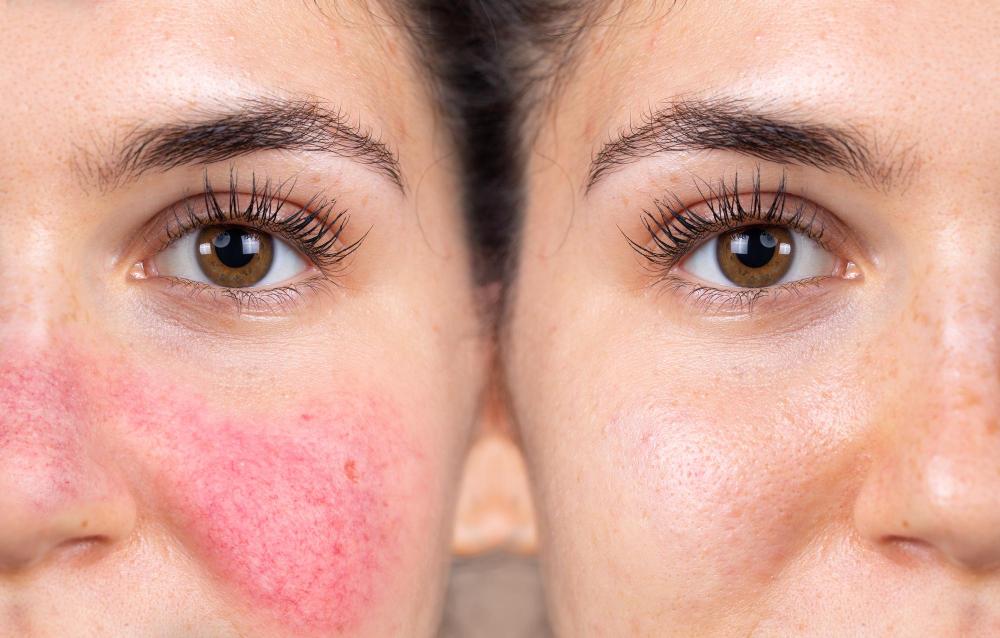
In short: Adult acne and rosacea can both cause facial bumps, but acne commonly includes blackheads or whiteheads, while rosacea more often brings central facial flushing, persistent colour, visible vessels, stinging or eye symptoms. Some people have both. Correct diagnosis matters because aggressive acne products can worsen rosacea-sensitive skin.
Key takeaways
- Blackheads and whiteheads favour acne; flushing and visible vessels favour rosacea.
- Rosacea can appear brown or violet rather than bright red on deeper skin tones.
- Eye irritation, gritty eyes or eyelid inflammation should be mentioned promptly.
- Using more exfoliating acids is not a safe test of whether a breakout is acne.
The overlap and the useful clues
Acne develops when follicles become blocked and inflamed. It may involve comedones, papules, pustules, nodules or cysts on the face, chest and back. Rosacea mainly affects the central face and may cause flushing, lasting colour, visible vessels, sensitive skin and acne-like bumps without comedones.
The distinction is not always obvious in photos, and deeper skin tones can hide visible redness. Burning, warmth, swelling, colour change and sensitivity may be more useful clues. Perioral dermatitis, folliculitis and medication reactions can also mimic acne.
| Clue | More typical of acne | More typical of rosacea |
|---|---|---|
| Blackheads or whiteheads | Common | Usually absent |
| Flushing | Not typical | Common |
| Visible facial vessels | Not a core feature | Can occur |
| Chest or back lesions | Common | Less typical |
| Burning or easy stinging | Possible with irritation | Common in sensitive rosacea skin |
Why the treatment plan changes
An acne plan may include a topical retinoid, benzoyl peroxide, azelaic acid, antibiotics or other prescription treatment depending on severity, scarring risk and pregnancy status. Rosacea treatment may use different anti-inflammatory or vessel-targeting options, along with trigger management and barrier-friendly skincare.
Some ingredients, such as azelaic acid, may appear in both plans, but dose, vehicle and context differ. Scrubs, strong peels and frequent product switching can inflame either condition. Deep acne, scarring, persistent redness or eye symptoms justify dermatologist-led care.
Lasers and peels come after diagnosis
Vascular light treatment may reduce selected rosacea-associated vessels or redness, but it does not replace control of active inflammation. Peels or resurfacing may help selected acne marks and scars after active breakouts are managed. Treating the wrong target can add irritation and pigment change.
In Dubai, heat, sun exposure, sweat and air-conditioned environments can influence symptoms and aftercare. These factors should inform product texture, sunscreen choice and procedure timing without being treated as the sole cause.
Prepare for a useful dermatology visit
Bring a list of products and medicines, photos of flushing episodes and a short record of triggers such as heat, spicy food, alcohol, exercise or menstrual changes. Mention eye symptoms and whether lesions occur beyond the face.
Seek earlier review for painful nodules, scarring, rapidly worsening redness, facial swelling, visual symptoms or significant eye pain. Do not stop prescription medicine without advice.
A consultation at The Reformery
At The Reformery in Dubai Hills Estate, treatment planning starts with a consultation and skin assessment. The clinician can confirm the diagnosis or concern, review medical history and recent sun exposure, explain realistic options and agree on aftercare. Booking a consultation does not commit you to a procedure. You can also WhatsApp us.
Frequently asked questions
Can you have acne and rosacea together?
Yes. A dermatologist may find features of both and build a plan that controls acne without aggravating rosacea sensitivity.
Does rosacea cause blackheads?
Blackheads and whiteheads are typical acne lesions and are usually absent in rosacea. Their presence does not exclude rosacea elsewhere on the face.
Can acne products make rosacea worse?
Strong retinoids, benzoyl peroxide, acids or scrubs can irritate sensitive rosacea skin, especially when started too quickly. Do not use irritation as proof that a product is working.
Is facial redness always rosacea?
No. Eczema, contact dermatitis, lupus, infection, sun damage and medication reactions can cause redness. Persistent or unexplained colour change needs assessment.
Can IPL treat both acne and rosacea?
IPL may address selected redness or vessels and some photodamage, but it is not a universal acne treatment. Active lesions, diagnosis and skin tone determine whether a device belongs in the plan.
Medical disclaimer
This article is for general information and does not replace an examination, diagnosis or personalised medical advice. Suitability, risks, treatment settings, recovery and results vary. Seek prompt medical care for severe pain, spreading redness, fever, vision changes, breathing difficulty or another urgent symptom.
Sources
- American Academy of Dermatology: Acne or rosacea? — diagnostic differences and why dermatology review helps
- American Academy of Dermatology: What is rosacea? — rosacea signs including eye involvement
- The Reformery: Medical dermatology — verified acne and rosacea services
