
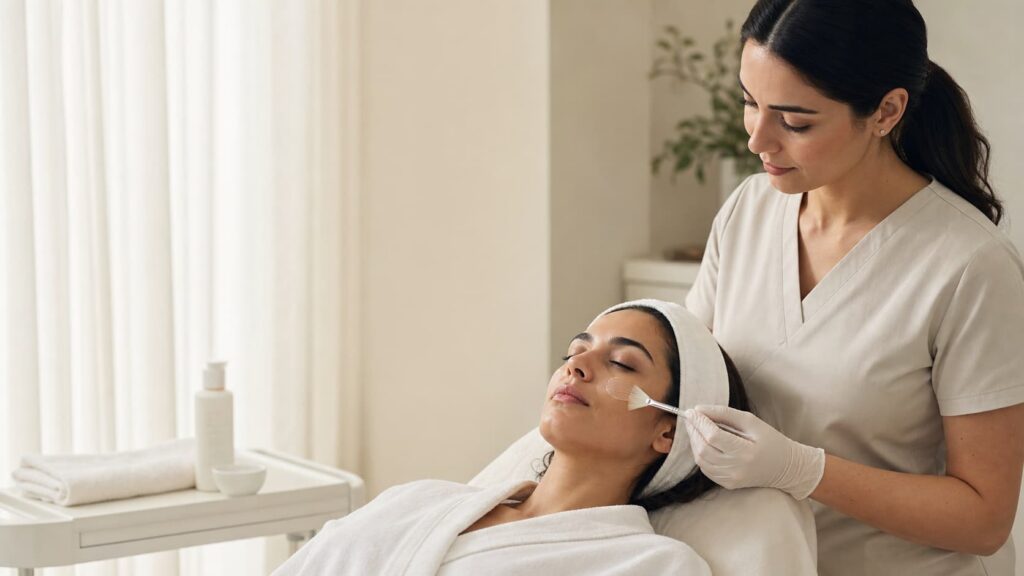
Dubai summers have a way of changing even the best-laid skincare plans. A quick walk from the car to a café can mean intense sunlight, while hours spent in air conditioning may leave the skin feeling dry and tight. It is understandable, then, that many people put off exfoliating treatments until winter. But is that always necessary?
The short answer is that a professionally selected chemical peel in Dubai can be safe during summer. The season alone does not make the treatment unsafe. What matters is the depth of the peel, your skin type, recent sun exposure, pigmentation history and—most importantly—whether you can protect healing skin afterwards.
That last point carries extra weight in the UAE. A peel removes part of the outer skin barrier to encourage more even cell renewal. While the skin recovers, it is temporarily more vulnerable to ultraviolet exposure. Careful planning is therefore essential, not optional.
Why summer changes the conversation
A chemical peel uses a controlled solution to loosen and remove damaged surface cells. Depending on its ingredients and depth, it may help improve dullness, rough texture, congestion, fine lines, post-acne marks and uneven tone.
The treatment does not suddenly become unsuitable when the temperature rises. The practical challenge is what happens after you leave the clinic. Strong UV exposure can irritate freshly treated skin and increase the chance of unwanted colour changes. This is particularly relevant for anyone who develops post-inflammatory hyperpigmentation easily, including many people with medium to deeper skin tones.
Heat and perspiration can also make healing skin feel more uncomfortable. Neither is the same as UV radiation, but a sweaty outdoor workout, beach afternoon or long day running errands may aggravate sensitivity. Good summer skincare in Dubai has to account for the sun, heat and the dehydrating effect of indoor air conditioning.
Not every chemical peel is the same
When people ask whether chemical peels in summer are safe, they are often grouping very different treatments together. Peel depth changes both the expected result and the recovery required.
Superficial peels
Light or superficial peels work mainly within the outermost skin layers. They may use ingredients such as glycolic, lactic, mandelic or salicylic acid, selected at an appropriate concentration for the individual. Recovery is generally shorter, although temporary redness, dryness or flaking can still occur.
For someone who works indoors, is not travelling to a sunny destination and can follow sun-protection advice, a clinician may consider a superficial peel reasonable in summer. “Light” does not mean risk-free, however. It still needs professional assessment and diligent aftercare.
Medium and deep peels
Medium and deep peels penetrate further and require more healing time. They can involve pronounced redness, swelling, crusting or peeling, along with much stricter sun avoidance. In Dubai’s brightest months, that can be difficult to manage in real life.
For this reason, a practitioner may recommend postponing a stronger peel until a time when you can remain indoors and control your sun exposure. A conservative decision is not a missed opportunity; it is part of protecting the result.
At The Reformery, the first step should be a skin assessment, not choosing an acid from a menu. The clinic’s chemical peel treatment can be tailored to the concern, sensitivity and available downtime.
Who should be especially cautious?
There is no single summer rule that fits every face. Tell your practitioner if you have recently tanned, burned or spent extended time outdoors. You should also discuss eczema, rosacea, active acne, broken skin, recurrent cold sores, previous pigmentation after procedures, a tendency to form raised scars, pregnancy and all current skincare or medicines.
Recent use of prescription retinoids or isotretinoin needs particular attention. Do not stop a prescribed medicine on your own; the treating clinician should advise you. The same applies to strong exfoliating acids, scrubs and hair-removal methods around the treatment area.
A consultation through The Reformery’s medical dermatology service may be helpful when pigmentation, inflammatory skin conditions or prescription treatments complicate the picture. Darker skin tones can be treated safely, but the peel choice and technique should reflect the person’s risk of post-inflammatory pigmentation.
Can a chemical peel help pigmentation in summer?
Yes, a carefully chosen chemical peel for pigmentation may form part of a broader plan for sunspots, uneven tone or post-acne marks. There is an important catch: treatment and prevention must go together. If the skin is repeatedly exposed to strong UV or visible light without suitable protection, pigmentation may return or become more noticeable.
Melasma deserves particular care because heat, sunlight and hormonal factors can all contribute to flare-ups. It is not a concern to treat aggressively without a diagnosis. In some cases, a clinician may favour a gentler peel, skin-conditioning products or another staged approach rather than chasing fast exfoliation.
Think of a peel as one tool, not a seasonal reset button. The best plan may combine in-clinic care with sunscreen, pigment-control products and realistic changes to daily exposure.
Chemical peel aftercare for Dubai weather
Good chemical peel aftercare begins before the appointment. Try to schedule treatment when the following week is predictable. A quiet stretch at work is far better than the day before a desert trip, pool weekend or outdoor wedding.
After treatment, follow the personalised instructions from your clinician. These usually include a few simple but important habits:
- Apply the recommended broad-spectrum sunscreen generously and reapply as directed, especially after sweating. Ask whether a tinted formula with iron oxides is appropriate if pigmentation is a concern.
- Use shade, a wide-brimmed hat and sensible timing as extra protection. Sunscreen is not permission to spend hours in direct midday sun.
- Keep the routine bland and soothing. Use the cleanser and moisturiser recommended for you, and avoid adding new “active” products while the skin is recovering.
- Do not pick flakes or try to speed up peeling with a scrub, cleansing brush or exfoliating acid. Let the skin shed naturally.
- Pause strenuous outdoor exercise, steam rooms, saunas and very hot showers for the period advised by your practitioner.
- Contact the clinic if you develop increasing pain, marked swelling, blistering, discharge or a reaction that feels more severe than the recovery described to you.
It is worth saying plainly: staying inside most of the day does not remove UV exposure. Driving, sitting beside a bright window and short daytime walks all add up. Consistency is what makes chemical peel aftercare effective.
When is it better to wait?
Postpone your appointment if you have sunburn, a fresh tan, irritated or infected skin, or cannot avoid significant sun during recovery. It may also be sensible to wait if you are about to travel, spend time on a boat, attend daily outdoor events or take a beach holiday.
If you want fresher-looking skin before an event but cannot accommodate peeling or sun restrictions, ask about a lower-downtime option. The Reformery’s Signature Facial includes treatments focused on cleansing and hydration, while microneedling is available for selected texture and collagen concerns. These are not automatic substitutes for a peel and have their own suitability and aftercare requirements, so professional guidance still matters.
So, should you book a chemical peel in Dubai this summer?
Potentially, yes—provided the treatment is selected by a qualified professional and your plans allow proper recovery. A light chemical peel in Dubai may fit comfortably into an indoor routine, while a medium or deep peel may be better saved for a period of easier sun avoidance. The right choice depends on your skin, not the month printed on the calendar.
Before booking, be honest about how much sun you receive, what you use at home and what is coming up socially or professionally. That conversation helps the practitioner choose a suitable peel, adjust its strength or recommend waiting.
At The Reformery, a personalised consultation can clarify whether a peel is the best route for pigmentation, acne marks, texture or dullness—and how to protect your skin afterwards. Summer treatment should never be about forcing a procedure into the diary. It should be about choosing an approach that your skin and lifestyle can realistically support.
