
A good holiday can change your mood for the better. Your skin, however, may return home with a rather different story.
Long flights, strong sunshine, air conditioning, late nights and a less consistent skincare routine can leave the complexion feeling tight, rough or unusually sensitive. Foundation may stop sitting smoothly. Fine dehydration lines can look more noticeable, and skin that appeared glowing in the sunshine may seem dull once the tan begins to fade.
The good news is that post-holiday skin recovery does not require an aggressive overhaul. In fact, doing too much too quickly can make stressed skin feel worse. A thoughtful recovery plan should first restore comfort and strengthen the skin barrier, then address lingering dullness, pigmentation or uneven texture.
Why does skin change after a holiday?
Several small changes tend to happen at once when we travel.
Sun exposure can increase moisture loss and trigger uneven pigmentation, even when the skin does not visibly burn. Heat and humidity may encourage sweating and congestion, while air-conditioned rooms and aircraft cabins can leave the skin feeling dry. Swimming introduces another challenge: salt water and chlorine can strip away some of the oils that help keep the skin comfortable.
Daily habits often shift too. You may drink less water, sleep at different times or simplify your usual skincare routine. None of these factors is necessarily serious on its own, but together they can leave the skin looking tired and feeling out of balance.
Common post-holiday concerns include:
- Tightness, flaking or rough patches
- A flat, tired-looking complexion
- Increased sensitivity or redness
- Congested pores and small breakouts
- Uneven tone, freckles or dark spots
- Fine lines that suddenly appear more visible
These concerns can overlap, which is why it helps to avoid diagnosing the problem from appearance alone. Skin that looks dry, for example, may actually be dehydrated and lacking water rather than oil.
Begin with a gentle 48-hour reset
When you first return, resist the temptation to scrub away dullness or immediately book the strongest available peel. If the skin barrier is already unsettled, intensive exfoliation can prolong redness, stinging and dryness.
For the first couple of days, keep your routine deliberately simple. Use a mild cleanser, a fragrance-free moisturiser suited to your skin type and a broad-spectrum sunscreen every morning. Pause facial scrubs, strong exfoliating acids and retinoids if products that normally feel comfortable begin to sting.
A cool compress may help skin that feels warm, but ice should never be placed directly on the face. If you have blistering, marked swelling, significant pain or a severe sunburn, seek medical advice instead of treating it as an ordinary cosmetic concern.
How to rehydrate skin without overwhelming it
A useful dehydrated skin treatment plan focuses on both adding water and reducing further moisture loss.
Look for a hydrating serum containing ingredients such as hyaluronic acid or glycerine. Apply it to slightly damp skin, then follow with a moisturiser containing barrier-supporting ingredients such as ceramides. The serum attracts moisture, while the cream helps keep it from evaporating too quickly.
More product is not always better. Layering several new serums onto sensitised skin makes it harder to identify the cause if irritation develops. Introduce one product at a time and allow the skin to settle.
Lifestyle habits support this process, although they do not replace topical care. Return to regular sleep, drink fluids consistently and include water-rich foods in your meals. A humidifier may also be helpful if you spend long periods in a heavily air-conditioned environment.
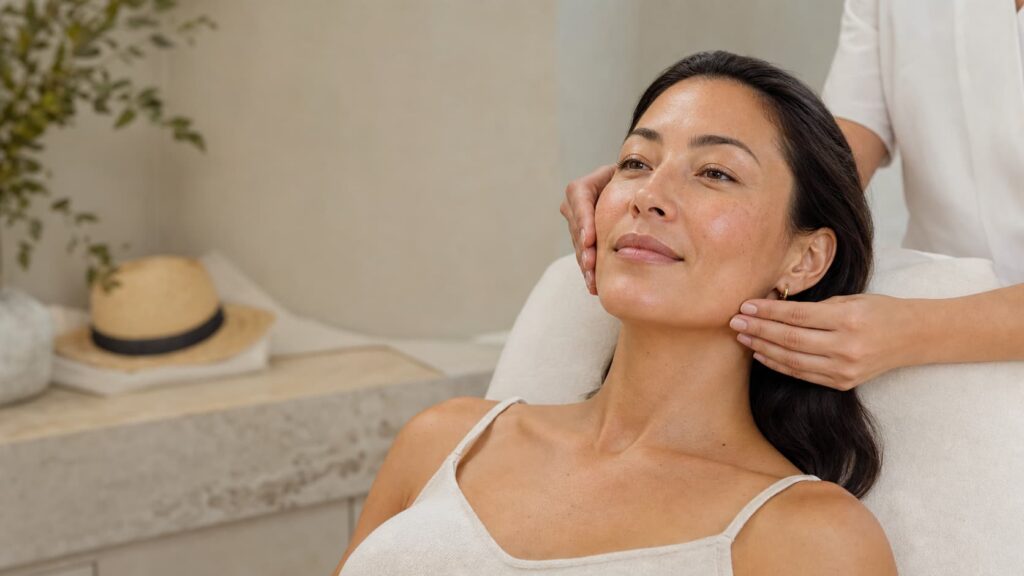
For professional support, The Reformery’s facial treatments include hydrating and customised options. The clinic’s Signature Facial can be tailored to concerns including dehydration and dullness following an individual skin assessment.
Treating dullness: exfoliation needs the right timing
Dull skin is often caused by a combination of dehydration, surface-cell build-up and disrupted sleep. Once sensitivity has settled, gentle exfoliation may help restore a smoother, brighter appearance.
Start slowly. A mild exfoliating product used once a week may be enough for an at-home dull skin treatment. Avoid combining several acids, scrubs and retinoids in the same routine. The aim is gradual renewal, not visible peeling.
Professional treatments can offer more controlled exfoliation. Microdermabrasion is designed to exfoliate the surface of the skin and may be considered for rough texture or a lacklustre complexion. It will not be suitable for every person, particularly while the skin is irritated.
The Reformery also offers personalised chemical peel treatments for concerns such as dullness, uneven texture and pigmentation. The appropriate peel strength and timing should be decided after a consultation. Recently sun-exposed or sensitised skin may need time to recover before exfoliation is appropriate.
What can be done about sun stress and pigmentation?
Sun stress does not always look like a dramatic burn. It may appear gradually as dryness, persistent redness, patchy pigmentation or a rougher texture. These changes should be approached carefully, especially in Dubai, where incidental ultraviolet exposure can remain high during everyday activities.
The foundation of any sun-damaged skin treatment is consistent sun protection. Apply a broad-spectrum SPF 30 or higher every morning, use enough to cover exposed areas and reapply when spending time outdoors. A hat, sunglasses and shade provide useful additional protection.
Vitamin C may help support a brighter, more even-looking complexion, while a retinoid can assist with texture and visible signs of photodamage. Both can irritate sensitive skin, so they should be introduced gradually and only after the barrier feels comfortable. Anyone who is pregnant, breastfeeding or managing a skin condition should seek professional guidance before using active ingredients.
Pigmentation is not always caused by the same process. Sunspots, melasma and post-inflammatory marks can look similar but may respond differently to treatment.
Which professional treatment is right after a holiday?
There is no single best treatment for every returning traveller. The right option depends on what the skin needs now, not simply on which procedure is most popular.
For dryness and temporary dullness, a hydrating or customised facial may provide a sensible starting point. If congestion and surface roughness are the main concerns, carefully timed exfoliation may be more appropriate. Persistent pigmentation, redness or sensitivity deserves a more detailed assessment.
For people exploring advanced skin rejuvenation treatments in Dubai, The Reformery also offers mesotherapy. The treatment is intended to deliver selected ingredients into the skin and may be considered for hydration, texture or general rejuvenation. Because it is minimally invasive, suitability, downtime and aftercare should be discussed with a qualified practitioner.
A consultation is particularly important if you recently experienced sunburn or intend to undergo a peel, microneedling, laser or another treatment that temporarily increases sensitivity. Being honest about recent sun exposure, products, medication and travel helps the practitioner recommend safer timing.
A simple seven-day recovery routine
Your first week back can be refreshingly uncomplicated.
Morning: Cleanse gently or rinse with lukewarm water, apply a hydrating serum if tolerated, moisturise and finish with broad-spectrum sunscreen.
Evening: Remove makeup and sunscreen without scrubbing, cleanse gently and apply a barrier-supporting moisturiser.
Once the skin is calm: Reintroduce active products one at a time. Leave several days between additions so you can see how your skin responds.
Try not to pick at peeling areas or blemishes. Avoid very hot water, fragranced products and repeated exfoliation while the skin feels sensitive. If you have an upcoming event, allow enough time for professional treatment and any expected recovery rather than scheduling a new procedure at the last minute.
How long does post-holiday skin recovery take?
Mild dehydration and temporary dullness may begin to improve within several days of consistent care. Pigmentation, ongoing sensitivity and texture changes usually require more patience.
Progress is rarely perfectly linear. Skin may look better one morning and feel dry again after a long day in air conditioning. What matters is the overall trend. If redness, itching, breakouts or pigmentation continue to worsen, arrange a professional assessment rather than repeatedly changing products.
Give your skin what it actually needs
A holiday glow should not have to be chased with harsh scrubs or an overcrowded bathroom shelf. The most effective post-holiday skin recovery plan begins by calming the skin, restoring hydration and protecting it from further ultraviolet exposure.
Once the barrier is comfortable, targeted professional care can address remaining dullness, uneven tone or texture. At The Reformery, treatment plans are based on individual skin needs rather than a one-size-fits-all formula. Book a consultation to understand what your skin needs now and how to maintain healthier-looking results long after the holiday is over.
