
After a long Dubai summer, skin can tell the story in small ways: pigmentation looks darker, makeup catches on dry areas, or the complexion seems dull and uneven. It is tempting to book the most intensive treatment available and call it a reset. The better choice is the one that suits your skin now, your available downtime and your ability to avoid the sun afterwards.
When comparing chemical peels vs laser resurfacing, the short answer is this: a clinician may consider a chemical peel for surface dullness, congestion and selected pigmentation concerns, while laser resurfacing may be considered when texture, fine lines or acne scarring need more targeted collagen remodelling. Neither is automatically “better”. Skin tone, recent tanning, sensitivity, medical history and the depth of treatment can change the recommendation.
At The Reformery in Dubai Hills, the sensible starting point is a consultation rather than a treatment name. Here is what to understand before you book.
What summer can leave behind
Ultraviolet exposure can contribute to uneven pigmentation and premature ageing. Heat, perspiration and hours in air conditioning may also leave skin congested yet dehydrated. But a dark mark is not always simple sun damage. Melasma, post-inflammatory hyperpigmentation and freckles behave differently; heat or inflammation can make some concerns more noticeable.
That is why any post-summer skin treatment in Dubai should begin after a fresh tan or sunburn has settled. A qualified practitioner should look at the concern, ask about recent sun exposure and review your skincare, medicines and previous reactions before recommending a procedure.
What is a chemical peel?
A chemical peel applies a controlled exfoliating solution to remove selected layers of surface cells and encourage more even renewal. Superficial peels generally work within the outer skin layers; medium and deep peels create a more substantial injury and need longer, stricter recovery.
A personalised chemical peel in Dubai may be considered for dullness, mild roughness, clogged pores, post-acne marks or uneven tone. Ingredients suit different concerns; salicylic acid, for example, may be selected for oily or acne-prone skin. Concentration, contact time, preparation and professional technique all affect safety, so this is not an invitation to copy a clinical peel at home.
Temporary stinging, redness, dryness and flaking can occur. Stronger peels involve more recovery and sun avoidance. Less common risks include infection, scarring and unwanted colour change.
What is laser resurfacing?
Laser resurfacing uses focused light energy to create a controlled effect in the skin. Some lasers remove part of the surface; others deliver energy below it. Fractional devices treat microscopic columns while leaving surrounding areas intact to support repair and collagen remodelling.
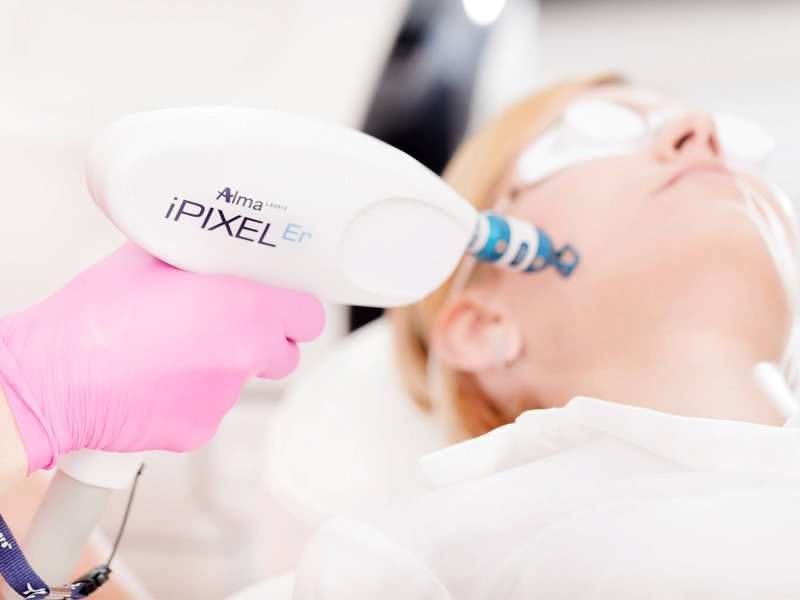
The Reformery’s iPixel Harmony laser skin resurfacing uses fractional Er technology. A practitioner may discuss it for uneven texture, fine lines, acne scars or selected pigmentation concerns. It is distinct from gentler options such as ClearLift Harmony, so “laser” is not one standard procedure.
With laser skin resurfacing in Dubai, device, wavelength, energy and depth all matter. Redness, swelling, sensitivity, dryness and peeling may occur; less common risks include infection, scarring or pigment changes. Recently tanned skin requires particular caution.
Chemical peels vs laser resurfacing at a glance
| Question | Chemical peel | Laser resurfacing |
|---|---|---|
| How does it work? | Uses a clinician-selected solution to exfoliate controlled skin layers | Uses targeted light energy to resurface skin and support remodelling |
| Often considered for | Dullness, congestion, mild roughness, post-acne marks and selected uneven tone | Acne scars, more established texture, fine lines and selected pigment concerns |
| Treatment intensity | Ranges from superficial to deep | Ranges from gentler non-ablative treatments to deeper fractional or ablative resurfacing |
| Downtime | Often shorter for a superficial peel; longer for deeper peels | Depends on the device and settings; fractional resurfacing may involve several days of visible recovery |
| Key post-summer issue | Freshly sun-exposed or irritated skin may be more reactive | A tan can increase the risk of pigment changes and may mean treatment should be postponed |
| Best choice | The option matched to a diagnosis, skin tone, goals and realistic aftercare | The option matched to a diagnosis, skin tone, goals and realistic aftercare |
Which option fits your main concern?
If dullness and congestion are bothering you
A superficial chemical peel may be the more proportionate approach. If skin is mainly dehydrated or sensitive, however, exfoliation may not come first. A lower-downtime HydraFacial might be discussed after assessment.
If texture or acne scars are the priority
Laser resurfacing may reach concerns beyond the surface, especially when collagen remodelling is part of the plan. Improvement is usually gradual. Microneedling may also be considered for selected texture and post-acne concerns, but it has different risks and is not an automatic substitute.
If pigmentation is the main issue
This is where diagnosis matters most. A sun damage treatment in Dubai should not assume every brown patch is the same. A superficial peel may help selected surface pigmentation; a laser or light-based treatment may suit another concern. Melasma can respond unpredictably to heat and irritation.
If pigmentation is new, changing or difficult to identify, begin with medical dermatology rather than choosing from a treatment menu.
If downtime is limited
A light peel may involve less recovery than fractional laser resurfacing, but a deeper peel may require more. A non-ablative laser also differs from an ablative one. Tell the clinician about work, exercise, travel and upcoming events; these details shape treatment selection.
When it may be better to wait
Postpone treatment and seek advice if you have a fresh tan or sunburn, broken or infected skin, an eczema or rosacea flare, or a cold-sore outbreak. Disclose poor wound healing, raised scars or pigmentation after procedures. Pregnancy, breastfeeding, retinoids, recent isotretinoin use and photosensitising medicines must also be discussed. Never stop prescribed medication without medical guidance.
For medium to deeper skin tones, careful selection is essential because inflammation can cause post-inflammatory hyperpigmentation. A patch test or preparation plan may be appropriate. The aim is useful improvement with an acceptable risk profile, not maximum intensity.
The aftercare both treatments have in common
Whichever route you choose, follow the treatment-specific instructions. These may include a gentle cleanser and moisturiser, broad-spectrum sunscreen, shade and avoiding picking, scrubs or unapproved active ingredients while skin heals.
Plan around Dubai life. A beach weekend or sunny holiday immediately after treatment is rarely compatible with recovery. Contact the clinic if pain, swelling, blistering or discharge exceeds what you were told to expect.
So, which post-summer skin reset is right for you?
Choose a chemical peel when the concern is mainly at the surface and controlled exfoliation is suitable. Consider laser resurfacing when texture, scarring or collagen remodelling needs a targeted approach. If skin is inflamed, tanned or depleted, the right answer may be to repair the barrier and wait.
The Reformery offers both chemical peels and iPixel Harmony resurfacing, allowing the conversation to begin with your skin rather than a one-treatment-fits-all promise. Book a consultation to discuss your concern, medical history, likely downtime, alternatives and aftercare. Results and recovery vary from person to person, and a consultation is required to determine suitability.
Frequently asked questions
Is a chemical peel or laser better for sun damage?
It depends on the type and depth of the concern. Superficial pigmentation may respond to an appropriately selected peel, while some texture and sun-related changes may prompt discussion of laser treatment. Melasma and unexplained lesions need careful assessment before either option.
How long after summer should I wait for treatment?
There is no universal date. Treatment should wait until sunburn has healed, a tan has faded and you can follow the recommended sun-avoidance and aftercare plan. Your practitioner should make the final timing decision.
Can darker skin tones have peels or laser resurfacing?
Potentially, yes. The treatment type, settings or peel depth must be selected with the person’s risk of post-inflammatory hyperpigmentation in mind. Individual assessment is essential.
Can chemical peels and laser resurfacing be combined?
They may appear in a staged treatment plan, but combining or closely spacing procedures can increase irritation. Only a qualified clinician should decide the sequence and interval after examining the skin.
How many sessions will I need?
That varies with the concern, treatment depth, response and goal. Some people may notice a change after one session; others may be advised to complete a series. No outcome or number of sessions can be guaranteed without assessment.
Medical note: This article is general educational information and does not replace a consultation, diagnosis or personalised treatment plan. Treatment suitability, risks, recovery and results vary. The final copy and advertising placement should be reviewed by The Reformery’s DHA-licensed clinical and compliance team before publication.
